

One would think that a new TV deal worth around $150M a year, for a guaranteed three years, would be a cause of universal congratulations. But such is the toxicity in the Internet Wrestling Community, it only takes a slow ten-count before the naysayers are out picking holes in the terms. Because everyone on X has a law degree and a crystal ball into the future.
When it comes to AEW, those who prefer WWE, or have just taken a complete dislike to the wrestling upstart, spend hours looking into their crystal balls and manifesting its implosion. Much like the Millennium Bug, these predictions will invariably amount to nothing. Not that there aren’t any legitimate concerns about the health of the company or its creative direction at times, but they are nothing more than growing pains. Also, pro-wrestling doesn’t—despite what some will have you believe—follow a sure-fire formula for success. Much of the time, it’s hit and miss until you find something that works. Then the money maker is usually milked until it’s shrivelled beyond recognition (looking at you, nWo).
AEW was always going to have a period of readjustment. It burst onto the scene at a time when WWE was flat. A generation of fans had either left pro-wresting altogether or enjoyed less accessible shows and the indies. Mainstream wrestling was as good as dead to many. Which is weird to say because it remained a commercial success by most metrics. Vince McMahon had no real competition and was in coast mode. And the IWC complained. AEW was the cure to the illness.
In the first year—and through the pandemic—there was a genuine organic buzz. There is now an unfair lens where everything they do is subjected to a harsher critic. Maybe this is paying back the goodwill tax when its roster had less star names, that managed to put on enthralling shows, but were given more leeway.
It’s impossible to keep the original vibe while expanding and evolving. Sure, the roster is bloated and many brought in nudged out AEW originals then failed themselves. Like Miro. He came, was touted as a future world champion. But instead he sits at home because he has issues with creative. Just like he had issues with WWE creative.
He’s not the only star to bring Tony Khan a problem or two. The obvious one being CM Punk. Who, in a swift career move, proved he is a hypocrite and someone should tell him he’s told lies. But—he is symbolic of the problem some fans are suffering with AEW: they thought they wanted a WWE alternative when all they wanted was WWE to be better.
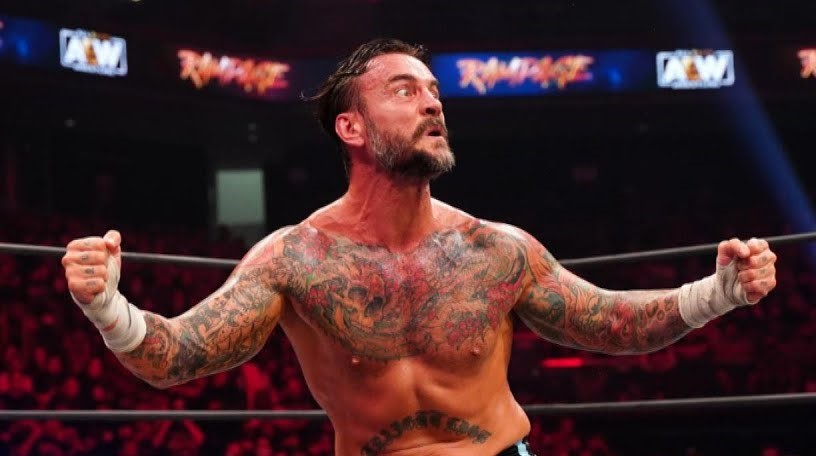
WWE has now improved (competition does that). And a reinvigorated WWE product has fans returning to The Fed, which leads them to complain about the things AEW do that is so un-WWE like. So AEW is damned if it does, damned if it doesn’t. It is the alternative and thus, can’t be a WWE with lower production values that has spots with blood. Which is handy, because WWE has decided it will now do blood again so those Fed fans that complain can secretly enjoy their fix.
We read about less backstage issues now Punk has left. I’m not saying he was a leak, or the cause of them all, it’s just an observation. The most telling recent leak revolved around Britt Baker. If there’s any truth that she bumps heads a lot, it’s a true test for Tony Khan and his powers of discipline.
This writer is a fan of Tony Khan. He has saved the pro-wresting business from succumbing to a WWE PG Era bland, cartoonish, parody. There’s no doubt he gets things wrong. He isn’t a natural in front of the camera. He has done things he said he wouldn’t do (like being on camera as a character). The most notable being keeping Rey Fénix under contract when he looked WWE-bound.
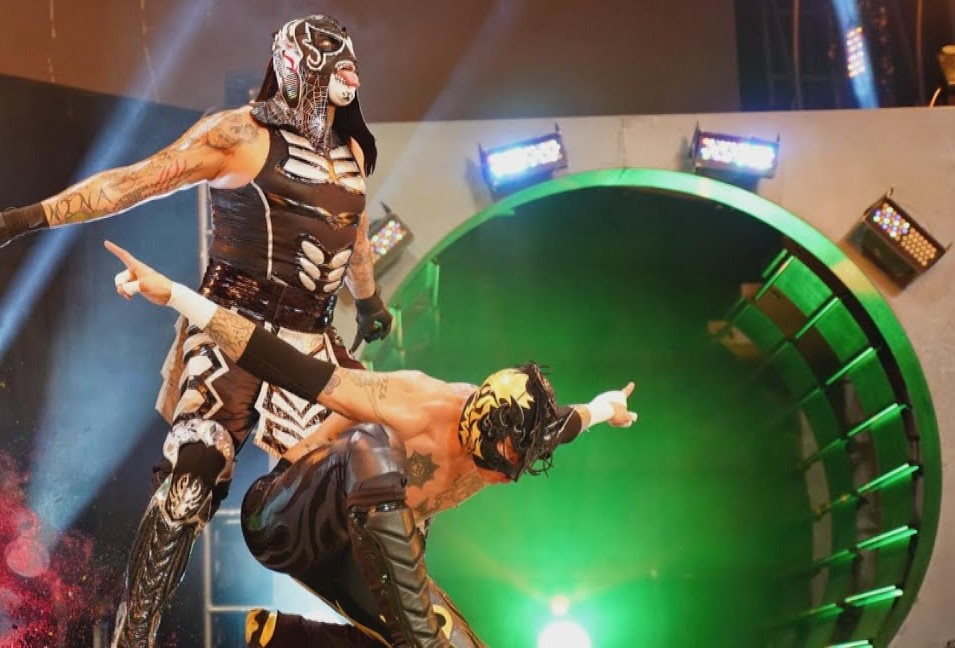
This was a smart business decision. Back when AEW was new, Tony offered overlooked wrestlers a chance to show their talents on an international stage, free from overbearing creative. He didn’t want it to be a prison, if people found they didn’t like it, they could leave. That was great when AEW was finding its feet, but like many things in life, the fun is always ruined by people who take the piss.
Those heady days have ended and will never return. Tony needs to become a stern leader. In the Mr. McMahon documentary, Tony Atlas explained how Shane McMahon was too nice to be the boss. Khan is finding out the hard way there isn’t a truer statement in pro-wrestling. The locker room will see a benevolent employer as a pushover. If he let the Lucha Brothers leave for WWE, there could be a significant number of other wrestlers pressing for their release.
Some may see this as an admission that there’s real trouble in AEW. Why would so many want to leave all of a sudden? Because people who had bad attitudes elsewhere have found out they can’t swing the lead in AEW. And those who feel underutilised want a chance in a different place. They should be reminded that hard work and the right character count for everything: just look at Swerve Strickland. There will be some who think AEW has a ceiling that hinders their prospects of transcending pro-wrestling.
The belief on that last point has evidence if you think TV ratings carry any weight. In reality, they do. If a million people are watching you perform every week, that increases your chances of being seen by the right movie director or becoming part of the Zeitgeist.
This is an area where both AEW and WWE fans have double standards. WWE fans for years of defending declining ratings. Then AEW supporters—led by an over-exuberant Tony Khan—spoke of a Wednesday Night War when week-after-week Dynamite out performed NXT in the rating. Hell, Chris Jericho even called himself the Demo God.
It seems in wrestling, the ratings only matter if your side is winning.
Warner Bros. Discovery (WBD) doesn’t appear too concerned with the current ratings. As part of the new deal, Dynamite and Collision will also be streamed on Max. This gives greater exposure to AEW. It also should be noted AEW has been streamed for a long time on Triller TV. It would be naive to think fans in the USA don’t access it there with a VPN. If there was a worryingly decline in interest, AEW’s PPV model would collapse, they wouldn’t be able to fill major events.
Wembley managed just shy of 50,000 this year (capacity reduced due to local constraints) and WrestleDream sold more tickets than last year’s edition.
The weekly shows are struggling to fill arenas. Welcome to austerity. Everyone has less disposable income. WWE has trimmed a notable amount of WWE Live dates. All companies have reduced footfall. AEW should acknowledge this and select more bespoke, smaller capacity venues.
Running weekly shows will always lead to fan fatigue. AEW has been judged harshly, not only with attendance, but with the notion it doesn’t tell stories. We always had weekly matches without build. Jim Powers would be rolled out on TV just to showcase WWE’s prime talent. Sure, the commentators would use that as an opportunity to discuss the superstar’s wider issues to progress a story, but the match itself was irrelevant and came from nowhere. At least now, we get competitive matches and—this may come as a shock to some people—the act of storytelling in pro-wrestling originally was told in the ring. The art of this sport we love is to tell a complete story with the ebb and flow, the subtle gestures and mannerisms, from bell to three-count.
And the loudest critics—who for some reason get Dax’s attention—prove how flawed their argument has become. Apparently there was no story going into WrestleDream but we have some coming out of the PPV. Or, here’s an idea: the foundations and nuances of multiple stories is being laid over a long period.
What people mean when they say WWE tells stories and AEW doesn’t is this: WWE dumbs everything down so simpletons can understand it; AEW doesn’t spell everything out for its wrestling fans.
If The Fed’s feud of the year needed a bracelet to help fans understand, they aren’t going to understand true long-term storytelling that Jon Moxley or Hangman Adam Page are serving.
AEW has the strongest array of talent ever seen within an organisation. The number of men who could make convincing world champions runs into double figures. The women’s division is also loaded with viable candidates. Maybe this plethora of talent is often overwhelming when it comes to balanced booking. Tony Khan should seek fewer acquisitions and solidify the names on his books. One reason we don’t need a month long build to a match is because Tony can put on a dream card every day of the week and avoid repeats.
But he can’t (and shouldn’t) do this. So far, AEW hasn’t put on a bad PPV. And it’s good we see important matches on TV. But less is sometimes more. Tony Khan—for business purposes alone—needs the casual fan. WBD wants the casual fan.
AEW can never be a true diametrically opposed alternative to WWE and attract the stars diehards want to see, or the ratings TV execs demand. There has to be a crossover, like a Venn diagram, for what a successful pro-wrestling company looks like. There’s the sickos and the mainstream kids. Any extremes die out or remain on the fringe.
AEW isn’t dying out. It’s working its way from alternative to a Max mainstay. And only a lunatic would do this with it on the fringe.
The new Moxley era is already very promising. It delivers the organic edgy feeling AEW started out with but is accessible enough for it to grow and be accepted by a prime time audience. People wishing AEW to fail, are praying for a return to a bland WWE. Are hoping thousands of people struggle for work. Are working against the industry as a whole.
Every single promotion should be able to face criticism. But AEW doesn’t deserve the Doomsday Clock countdown or unreasonable negative bias.
AEW: Where it’s best if they continue to wrestle.
 Simms View