Lovers of WWE, along with its sycophants, slaves, and fan service outlets, lauded John Cena’s Brussels Heel pitch. It proved that if you’ve swallowed The Fed shaped pill and drank from their Kool Aid, any above average match is a five star classic and a run-of-the-mill promo is Shakespeare.
It’s not that Cena’s promo was terrible on Monday’s Netflix show. It was just very . . . meh. After a near perfect execution of his turn at the end of Elimination Chamber, the (delayed) follow up was empty. The turning on the fans trope is tired. Cena’s new character came across as two-dimensional, when he has the capacity to play a much deeper role. There’s certainly scope for a multifaceted Heel Cena. Well, at least there was. Now, we’re left with one who’d had enough of no one asking if he was okay.
The potential to explore the extent of his new relationship with The Rock should have been front and centre. With that, he could have described what “selling his soul” entailed and what he’s already received.
Alas, that never happened. It feels all intelligent plans were scrapped and instead, someone read Vince McMahon’s diary from the Seventies to find out what makes a basic bad guy.
Old school heat — but not in a good way.
To think, once upon a time when they considered flipping Cena, he made a new entrance theme and sought out different attire.
When the time actually came, it was more of the same, diluted down into a bitchy, misguided, bitter part timer.
It was easy to boo last Monday. But it wasn’t because of the excellent character work bringing on genuine heat. It was the standard of the segment.
And people called this industry changing? Comparing it to Hogan and the nWo.
The Big Show had better Heel segments and he had more turns than an F1 car.
SmackDown sucked the following Friday in Italy. A segment with Reigns, Rollins and Punk should have offered the chance to upgrade the verbal barbs. It was short and hardly sweet.
RAW is in Glasgow, Scotland next. A rough, gritty city. Babyheel Cena needs to soak up the local atmosphere and reboot his new persona or the Road to WrestleMania is going to feel like a grind.
One would think that a new TV deal worth around $150M a year, for a guaranteed three years, would be a cause of universal congratulations. But such is the toxicity in the Internet Wrestling Community, it only takes a slow ten-count before the naysayers are out picking holes in the terms. Because everyone on X has a law degree and a crystal ball into the future.
When it comes to AEW, those who prefer WWE, or have just taken a complete dislike to the wrestling upstart, spend hours looking into their crystal balls and manifesting its implosion. Much like the Millennium Bug, these predictions will invariably amount to nothing. Not that there aren’t any legitimate concerns about the health of the company or its creative direction at times, but they are nothing more than growing pains. Also, pro-wrestling doesn’t—despite what some will have you believe—follow a sure-fire formula for success. Much of the time, it’s hit and miss until you find something that works. Then the money maker is usually milked until it’s shrivelled beyond recognition (looking at you, nWo).
AEW was always going to have a period of readjustment. It burst onto the scene at a time when WWE was flat. A generation of fans had either left pro-wresting altogether or enjoyed less accessible shows and the indies. Mainstream wrestling was as good as dead to many. Which is weird to say because it remained a commercial success by most metrics. Vince McMahon had no real competition and was in coast mode. And the IWC complained. AEW was the cure to the illness.
In the first year—and through the pandemic—there was a genuine organic buzz. There is now an unfair lens where everything they do is subjected to a harsher critic. Maybe this is paying back the goodwill tax when its roster had less star names, that managed to put on enthralling shows, but were given more leeway.
It’s impossible to keep the original vibe while expanding and evolving. Sure, the roster is bloated and many brought in nudged out AEW originals then failed themselves. Like Miro. He came, was touted as a future world champion. But instead he sits at home because he has issues with creative. Just like he had issues with WWE creative.
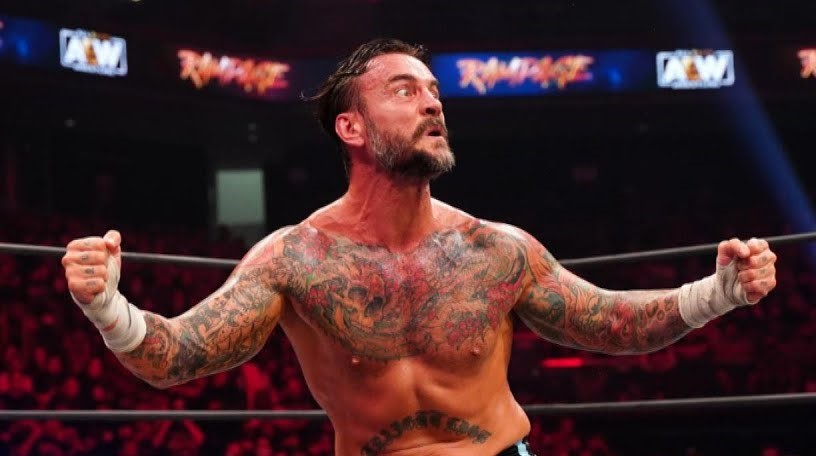
He’s not the only star to bring Tony Khan a problem or two. The obvious one being CM Punk. Who, in a swift career move, proved he is a hypocrite and someone should tell him he’s told lies. But—he is symbolic of the problem some fans are suffering with AEW: they thought they wanted a WWE alternative when all they wanted was WWE to be better.
WWE has now improved (competition does that). And a reinvigorated WWE product has fans returning to The Fed, which leads them to complain about the things AEW do that is so un-WWE like. So AEW is damned if it does, damned if it doesn’t. It is the alternative and thus, can’t be a WWE with lower production values that has spots with blood. Which is handy, because WWE has decided it will now do blood again so those Fed fans that complain can secretly enjoy their fix.
We read about less backstage issues now Punk has left. I’m not saying he was a leak, or the cause of them all, it’s just an observation. The most telling recent leak revolved around Britt Baker. If there’s any truth that she bumps heads a lot, it’s a true test for Tony Khan and his powers of discipline.
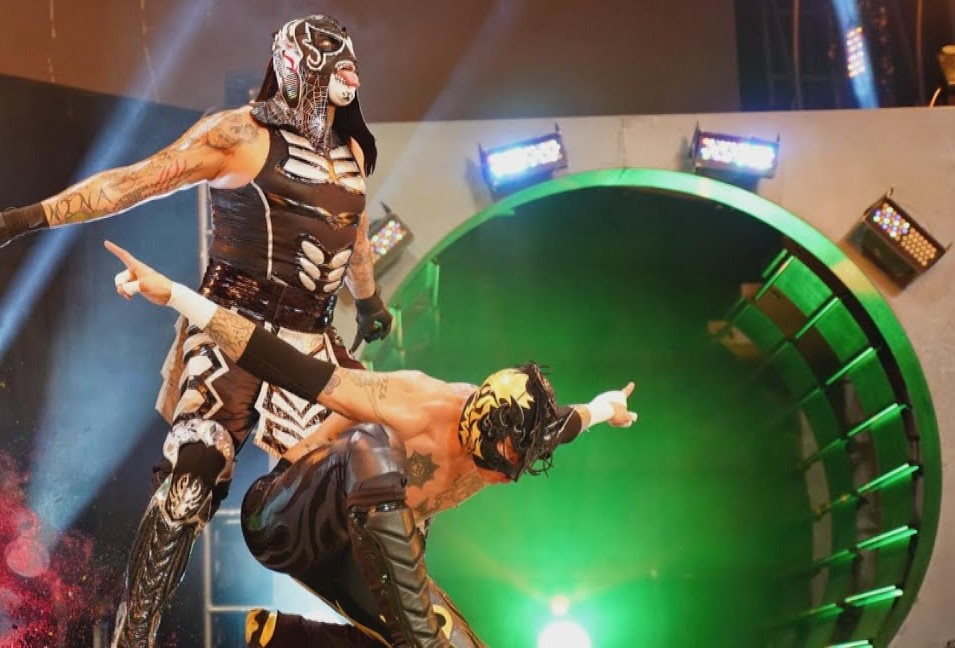
This writer is a fan of Tony Khan. He has saved the pro-wresting business from succumbing to a WWE PG Era bland, cartoonish, parody. There’s no doubt he gets things wrong. He isn’t a natural in front of the camera. He has done things he said he wouldn’t do (like being on camera as a character). The most notable being keeping Rey Fénix under contract when he looked WWE-bound.
This was a smart business decision. Back when AEW was new, Tony offered overlooked wrestlers a chance to show their talents on an international stage, free from overbearing creative. He didn’t want it to be a prison, if people found they didn’t like it, they could leave. That was great when AEW was finding its feet, but like many things in life, the fun is always ruined by people who take the piss.
Those heady days have ended and will never return. Tony needs to become a stern leader. In the Mr. McMahon documentary, Tony Atlas explained how Shane McMahon was too nice to be the boss. Khan is finding out the hard way there isn’t a truer statement in pro-wrestling. The locker room will see a benevolent employer as a pushover. If he let the Lucha Brothers leave for WWE, there could be a significant number of other wrestlers pressing for their release.
Some may see this as an admission that there’s real trouble in AEW. Why would so many want to leave all of a sudden? Because people who had bad attitudes elsewhere have found out they can’t swing the lead in AEW. And those who feel underutilised want a chance in a different place. They should be reminded that hard work and the right character count for everything: just look at Swerve Strickland. There will be some who think AEW has a ceiling that hinders their prospects of transcending pro-wrestling.
The belief on that last point has evidence if you think TV ratings carry any weight. In reality, they do. If a million people are watching you perform every week, that increases your chances of being seen by the right movie director or becoming part of the Zeitgeist.
This is an area where both AEW and WWE fans have double standards. WWE fans for years of defending declining ratings. Then AEW supporters—led by an over-exuberant Tony Khan—spoke of a Wednesday Night War when week-after-week Dynamite out performed NXT in the rating. Hell, Chris Jericho even called himself the Demo God.
It seems in wrestling, the ratings only matter if your side is winning.
Warner Bros. Discovery (WBD) doesn’t appear too concerned with the current ratings. As part of the new deal, Dynamite and Collision will also be streamed on Max. This gives greater exposure to AEW. It also should be noted AEW has been streamed for a long time on Triller TV. It would be naive to think fans in the USA don’t access it there with a VPN. If there was a worryingly decline in interest, AEW’s PPV model would collapse, they wouldn’t be able to fill major events.
Wembley managed just shy of 50,000 this year (capacity reduced due to local constraints) and WrestleDream sold more tickets than last year’s edition.
The weekly shows are struggling to fill arenas. Welcome to austerity. Everyone has less disposable income. WWE has trimmed a notable amount of WWE Live dates. All companies have reduced footfall. AEW should acknowledge this and select more bespoke, smaller capacity venues.
Running weekly shows will always lead to fan fatigue. AEW has been judged harshly, not only with attendance, but with the notion it doesn’t tell stories. We always had weekly matches without build. Jim Powers would be rolled out on TV just to showcase WWE’s prime talent. Sure, the commentators would use that as an opportunity to discuss the superstar’s wider issues to progress a story, but the match itself was irrelevant and came from nowhere. At least now, we get competitive matches and—this may come as a shock to some people—the act of storytelling in pro-wrestling originally was told in the ring. The art of this sport we love is to tell a complete story with the ebb and flow, the subtle gestures and mannerisms, from bell to three-count.
And the loudest critics—who for some reason get Dax’s attention—prove how flawed their argument has become. Apparently there was no story going into WrestleDream but we have some coming out of the PPV. Or, here’s an idea: the foundations and nuances of multiple stories is being laid over a long period.
What people mean when they say WWE tells stories and AEW doesn’t is this: WWE dumbs everything down so simpletons can understand it; AEW doesn’t spell everything out for its wrestling fans.
If The Fed’s feud of the year needed a bracelet to help fans understand, they aren’t going to understand true long-term storytelling that Jon Moxley or Hangman Adam Page are serving.
AEW has the strongest array of talent ever seen within an organisation. The number of men who could make convincing world champions runs into double figures. The women’s division is also loaded with viable candidates. Maybe this plethora of talent is often overwhelming when it comes to balanced booking. Tony Khan should seek fewer acquisitions and solidify the names on his books. One reason we don’t need a month long build to a match is because Tony can put on a dream card every day of the week and avoid repeats.
But he can’t (and shouldn’t) do this. So far, AEW hasn’t put on a bad PPV. And it’s good we see important matches on TV. But less is sometimes more. Tony Khan—for business purposes alone—needs the casual fan. WBD wants the casual fan.
AEW can never be a true diametrically opposed alternative to WWE and attract the stars diehards want to see, or the ratings TV execs demand. There has to be a crossover, like a Venn diagram, for what a successful pro-wrestling company looks like. There’s the sickos and the mainstream kids. Any extremes die out or remain on the fringe.
AEW isn’t dying out. It’s working its way from alternative to a Max mainstay. And only a lunatic would do this with it on the fringe.
The new Moxley era is already very promising. It delivers the organic edgy feeling AEW started out with but is accessible enough for it to grow and be accepted by a prime time audience. People wishing AEW to fail, are praying for a return to a bland WWE. Are hoping thousands of people struggle for work. Are working against the industry as a whole.
Every single promotion should be able to face criticism. But AEW doesn’t deserve the Doomsday Clock countdown or unreasonable negative bias.
Tony Khan had every right to tout the May 10 episode of Dynamite as a PPV on TBS. The match card was stacked. Ring of Honor World Champion Claudio Castagnoli faced off against ROH Tag Team Champ Rey Fénix, the AEW International Championship and the World Trios Titles would be defended, with a main event of Jon Moxley squaring off against longtime nemesis Kenny Omega in a steel cage. In between we’d get Anna Jay and Julia Hart in a No Holds Barred match and hear from Christian Cage and FTR.
On paper, it really did look like a PPV. But there’s a term in football: the game isn’t played on paper. Just because a card looks good, doesn’t mean it’ll stand up. One thing AEW does well is PPVs. Even when the company has had a rare dip heading into a PPV, it always delivers. So giving a nod to that standard for a TV show was adding pressure.
The opening bout between Fénix and Claudio had the stipulation that whoever won could challenge the other for their belt. Readers familiar with my opinions will know I’m not a fan of non-title matches where a champ can lose in order to serve as a qualifier (or “title elimination match”). It’s my view that if you’re fighting, the gold’s on the line.
Having said that, this was a smart compromise. It served as an eliminator, both could look strong regardless of outcome, and the Tag Titles being in the mix add another permutation. There’s more chance of finding a universe where Donald Trump is a quiet humble man, and Aqua followed up “Barbie Girl” with an album that surpassed Led Zeppelin’s excellence, than you are to come across one where Fénix and Castagnoli put on anything other than a high grade contest. If you don’t enjoy watching these two, you don’t really enjoy wrestling.
It started high tempo and never took a breath. Taz observed on commentary that they were only four minutes in, and there’d already been so much action.
Claudio winning is a shame in the sense it keeps Rey Fénix away from a big singles match but Khan is building the Swiss star into an indestructible force. It would be logical to assume he’ll choose Wheeler Yuta as his tag parter, and that’s who’ll eat the pin when the BCC face off against the Lucha Brothers.
The show definitely got off to a PPV-worthy start but this is where we should remember it is a television show. It would be remiss of Tony Khan to go all in [is that a pun? — Danny] on weekly programming as it’d make the big shows feel less grand. Unlike WWE PPVs that consist of extensive filler, AEW is more action packed which leaves little room for storyline expansion. With this being a TV show, there was need to punctuate the matches with developments.
We saw both Miro and Thunder Rosa return backstage and went to Tony Khan’s office. Both have been sorely missed. Yes, it’s a stacked roster but these two are world class talents. Thunder Rosa especially should be thrown straight back into the world title scene. Miro probably needs to earn some trust with Khan’s creative instincts before he’s main eventing.
Two different ways to progress a feud were also presented. FTR continued their troubles with Jay Lethal and Jeff Jarrett. Mark Briscoe came out to announce he would be the special guest referee at Double or Nothing when FTR’s AEW World Tag Title will be up for grabs. In what was supposed to be a drink to toast the creation of the match, Sonjay Dutt spat the spirit (I’m guessing a fine tequila) into Dax Harwood’s eyes. A blinded Harwood acted on instinct, and during the ensuing melee delivered a piledriver to Mark Briscoe. At this point, it should be mentioned Dutt must be a genius because there’s not a character I despise more in all of professional wrestling.
Dax could play the role of impetuous hothead well. They should lean into his unhinged, hit-first-ask-later side more often.
Christian Cage went down the other path to build his issues with Wardlow. He delivered a speech that begs the question: is Christian the best at cutting a heel promo in the world? MJF has a strong shout but Christian’s are delivered with such callous precision, it’s a close call. He managed to get a dead dad remark in too, just so you know the level he’s aiming for.
There are two types of people in the world. Those who prefer Coke over Pepsi. Those who think Edge is better than Christian. I am not in the Edge camp. Christian is a legend who delivers to a higher standard in every department.
The Trios match between House of Black and Best Friends and Bandido never really recovered from a stipulation that wasn’t fully utilised. It was an average part of the show where no one expected Malakai and his crew to lose. Even Julia Hart won in the match beforehand over Anna Jay. That probably was a better bout than the Trios Title defence, and the women sold the violence well, but it wasn’t on the level we’ve seen from other hardcore female matchups.
Slightly above the middling matches was the Orange Cassidy International Championship defence against Daniel Garcia. Again, no one would have expected OC to drop the belt here. It’s clear that Garcia is in some kind of holding pattern. He loses title matches but always looks strong. He put Cassidy through the wringer, his cockiness being the downfall. For a man who slayed the American Dragon, he needs another notable win soon.
Let’s cut to the chase on the main event. It wasn’t the best steel cage match we’ve ever seen in AEW. But it would never be like the Bucks and the Lucha Brothers. It was always going to be brutal. Bryan Danielson said on commentary that Mox doesn’t even wake up until he’s bleeding. And the blood flowed from both men.
You’d be surprised to hear that Jon Moxely became a top rope specialist, that most of his work was done from said rope. He wasn’t doing is best Rey Fénix impression though, he disassembled the top rope and proceeded to use its hook inside Omega’s mouth before choking him with the rubber covered steel.
Eventually both men went through the front of the cage following a V-trigger. Omega actually took the brunt of the damage, landing awkwardly on the lower portion of the cage.
Next, we entered swerve city. Moxley rolled Omega into the ring, both men now drained from barbwire wrapped chairs and landing on broken glass, and produced a screwdriver. Enter Don Callis, he snatched the tool from Moxley’s hand, pleaded not to be hit, which opened the door for Omega to launch Mox into a turnbuckle. Omega hit the One-Winged Angel, and well, nobody kicks out of that. Technically, Mox didn’t but he wasn’t pinned as Don Callis broke the three-count by driving the screwdriver into Omega’s head.
The ultimate betrayal.
Was this episode PPV quality? Not quite, it lacked that unquantifiable ingredient that makes AEW PPV’s standout. This is okay. After all, it’s an episodic TV show and on that front we had storyline builds, returning wrestlers and still a couple of matches that were of the highest order.
The main event is one of those highly rated affairs. It wasn’t like the speed and art of the opening match, instead it was an exercise in violence and nuanced storytelling. Some may initially dislike the Callis turn but it is a masterstroke that fully opens up the rivalry between the BCC and The Elite. There is a clear distinction between the good guys and the bad, and it’s okay if you still want them all to win. With these two factions at loggerheads, the fans will never be the losers.
Moxley and Omega added another chapter to their rivalry and with this one, there will never be a thawing of the hatred. Mox has now broken up family. These two are AEW’s Batman and Joker, destined to square off forever, neither able to overcome the other in definitive fashion.
The first WWE Premium Live Event following WrestleMania rolled into Puerto Rico, the first time it had held a major show for eighteen years. Roman Reigns wasn’t on the card, so it fell to the heir apparent to “continue the story” in his absence.
Before all that, the show kicked off with Bianca Belair defending her Raw Women’s Championship against Iyo Sky. It should not surprise to say this was a strong showing. Both are gifted athletes. Bianca Belair has ascended to the true upper tier of professional wrestlers. Sky sits in the group below (which is higher than most).
Belair sold the idea she’d injured an arm, which played a pivotal role as the story unfolded. There was one spot where she lifted Iyo above her head single-handedly, and on the release it appeared that Sky was caught between the no-man’s-land of not flipping to her back or landing safely on her front. Even at the highest level, such things can happen, so it’s no criticism of either woman. But Sky then played into it, by indicating she’d taken the brunt of the landing to her face. If it was intended, it was genius. If it was accidental, Iyo Sky showed sharp thinking.
There was a Damage CTRL run-in, it wasn’t enough to sway the result. Belair retained a belt for a brand they have drafted her away from.
Even with an electric crowd, and one of the most talented performers from any generation — Seth Rollins — it’s hard to get behind a match with Omos involved. Rollins vs Omos was WWE’s latest attempt to make the giant appear a credible threat without costing an established star a loss. They tried it here by having him resist one of Rollins’s stomps. Seth rested his boot on Omos’s neck as if he were waiting for his boots to be shined.
Rollins got the inevitable win with an elevated stomp and we had our first average match of the night. This led into another average bout: Austin Theory defending his US Title against Bobby Lashley and Bronson Reed. A title change here never felt likely, they are building the Theory brand. It probably isn’t the best place for Lashley to be right now. He deserves to be more than mid-card filler. WWE learned tonight, if the Puerto Rican crowd are to be believed, that Bronson Reed could be trusted with a bigger spotlight.
Rhea Ripley, defending the SmackDown Women’s Championship (a brand she’s been drafted away from) was next. It was an emotional entrance for her opponent Zelina Vega. She had tears in her eyes as she stood in the centre of the ring, spreading the host nation flag wide, paying homage to her late father. In other sports, home advantage has a lot of sway. On nights like this, it should serve as a superpower. Normally, the smart money would be on Rhea in this match-up, tonight, it would have been good to see Vega’s emotionally charged effort cause an upset.
It didn’t, and now we wait to see how WWE solves its lazy draft planning and gets Ripley and Belair to switch titles. A solution to prevent this situation occurring again — because it seems to happen every draft now — is to rename the belts so none of them are brand specific, like what we have with the men’s titles.
The match which may have been given the most love online during the live broadcast was the Street Fight between Bad Bunny and Damien Priest. And with good reason. Bad Bunny held his own. In the early stages, Priest carried the match well in the ring, proving his real worth and talent to WWE. It spilled to the arena where Bunny found himself put through a table and was attended to by Adam Pearce and a crew of WWE officials. They wanted Priest to show mercy — he didn’t.
It then became a spot with run-ins, Judgment Day as expected, Carlito less so. It gave the event the feel of a house show. That’s meant in a good way. It was a raw, organic energy.
Priest began to sell an injured knee and Bad Bunny grabbed a win with a Canadian destroyer. It was a case of giving the people what they want. It also means only Rhea Ripley can win for Judgment Day when it matters.
It’s easy to skim over The Bloodline against World Tag Champs of Sami Zayn and Kevin Owens who were teaming with Matt Riddle. The action itself was decidedly average. The main point was to service The Bloodline’s story. The sticking point is the beef between Jey Uso and Solo Sikoa.
The problem this faces is it’s the sequel to the best story WWE has told for years. The Karate Kid Part II isn’t a bad movie, it’s just not as good as the first. This was an above average affair but the overall programme will need something extra to stop it falling well short of its predecessor.
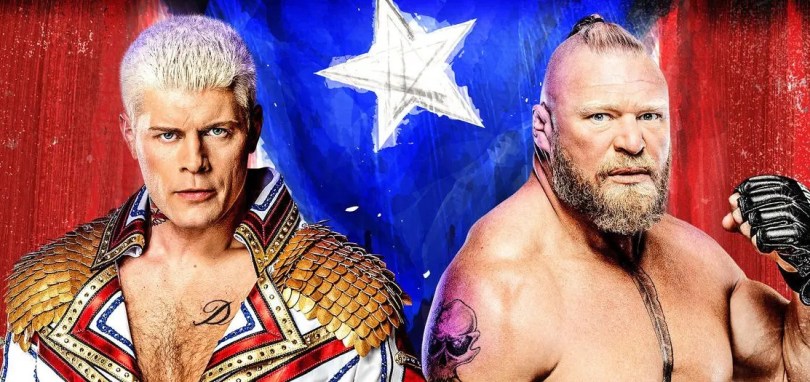
Brock Lesnar facing off against Cody Rhodes closed the show. Beforehand, my vote would have been for a Lesnar win. Rhodes needs his story to have a few more chapters before he faces Roman Reigns again. A setback against the Best Incarnate would achieve this. This gave WWE a few options, meaning nothing was a given.
One thing almost certain was that Rhodes wouldn’t just live through a prescriptive Lesnar suplex city match. Sure, that element featured, but only after Rhodes had given him the jump before the bell (stomping for the ring steps as if he was a Bushwhacker). Cody Rhodes is about putting on showcases and was always going to try and get a memorable bout out of Lesnar.
Eventually, a turnbuckle became exposed, and when the time came, Brock committed his head into the exposed metal. The cut was deep and instant; the blood followed in a way that would make Jon Moxley proud. Lesnar fought on and applied the Kimura lock. Rhodes rolled Brock’s shoulders to the mat and stole a win.
Brock Lesnar appearing shocked and bloodied sold the brutality.
Backlash opened and closed with matches scoring 8/10. Overall, a very fun show.
First off, let’s be clear: there isn’t really a wrestling war right now. Tony Khan believes there is. Certain elements of the Internet wrestling community think there is (and actively partake in dropping bombs) and talent pretends there is when it’s contract renewal time. But the reality is, there can’t be a war when one company is so far ahead of the other in terms of TV ratings and revenue.
Nothing AEW achieves will put WWE out of business. WWE was recently valued as a $9.3 billion enterprise as it formed a new company following Endeavor’s acquisition and merger with UFC. That combination touted as being worth in excess of $21 billion.
Tony Khan couldn’t get a TV deal for Ring of Honor.
In the war between WWE and WCW, it was a fight to the death. This time—at best—it may slightly affect WWE’s bottom line if AEW continues to grow, and ran live events on the same days as WWE’s non-televised shows. AEW’s arrival has actually generated more chances for wrestlers to work. It’s opened up the wrestling world and brought in more fans, or at the very least, brought back those who had become disenfranchised.
What was notable in the Monday Night War was how WWE had to change its game. Vince McMahon’s natural inclination is to have PG, cartoony characters. When WCW produced an edgier product, Vince had to adapt. The Attitude Era was the result and has been viewed with nostalgia ever since.
In the modern day faux war, Tony Khan is the one holding the edgier, more adult based product. Blood may be banned in Stamford but Jon Moxley is contractually obliged to bleed every time he hears a bell ring. In this generation, the product closer to the Attitude Era has failed to win the ratings battle against RAW and SmackDown.
Eventually, the children currently watching WWE will outgrow it and migrate to AEW. Until then, Tony Khan needs to secure more viewership. Even the acquisition of big WWE names didn’t significantly budge the needle. CM Punk had a great Rampage debut but it didn’t translate into a massive return each Wednesday. Bryan Danielson is beloved by fans as one of the best wrestlers on the planet. He’s in a place now where he gets to prove it. The problem for TV ratings is, not many casual WWE fans care about wrestling, especially if it’s caked in violence.
The best way to directly compete with PG WWE is by creating PG content.
This is where Tony Khan faces a conundrum. AEW has a strong identity and style. Migrating to a PG show would all but kill the company. Its loyal fans (which are an organic fanbase) would leave, in the short-term it would fail to turn the heads of WWE viewers. The chances are, Tony doesn’t even see it as an option. But there are several (imperfect) solutions.
AEW’s TV shows are finally back in the groove after removing Ring of Honor content from weekly programming. Which brings us to option one. Ring of Honor, up to this point, has been presented along the same lines as AEW. Admittedly, its history doesn’t look like the natural fit for a PG presentation. But if you took a highlight reel from WWE’s Attitude Era, that would be a hard sell to a modern day TV exec for a PG Sports Entertainment show. Still, here we are.
ROH could easily be repackaged. The fact is, it failed to secure a TV deal after months of Tony Khan shilling the product on TBS and TNT. It would be superbly optimistic to expect the relaunched Honor Club to recruit a notable subscription count. Not many will pay $9.99 just for a weekly show.
Unless they are going to offer specials like Impact Plus, Tony Khan may need to return to the drawing board and turn ROH into the family friendly version of his universe. Women Of Wrestling’s ratings prove there is a market for a commercially friendly audience. Its ratings trounce Impact Wrestling, which itself is a solid product. He’d find it an easier sell to those in charge of cable channels to pick up a rejuvenated family version of AEW in the guise of a new ROH. There’d be enough separation between AEW and ROH to dispel fears that the PG audience may inadvertently be drawn to the edgier Wednesday and Friday shows.
The market exists to break WWE’s dominance (if not its profits) but the first rule of showbiz is to give the people what they want. The majority clearly want the soft version of wrestling that fills three hours of television every Monday night. Unless brand loyalty is so strong with WWE that people will watch it regardless of what they churn out. We know this can’t be entirely true. Ratings have improved since Triple H’s arrival as Head of Creative, proving it isn’t watched mindlessly by everyone.
Luring the WWE fanbase with a throwback product hasn’t made a significant dent into WWE’s coffers. It’s time to try with a direct imitation. It worked for WWE in the Nineties. DX was a reaction to nWo. The whole vibe of the Attitude Era was taking what WCW started and trying to do it better. History tells us they succeeded.
History has a way of repeating itself. Imitation is the best form of flattery. It’s time Tony Khan flattered WWE by creating a copy so good, it makes loyal viewers switch sides.
The rumoured AEW Collision show could be this vehicle instead of ROH. A two-hour Saturday show would need to resemble Dynamite’s story progression more than Rampage’s pure action dynamic. To differentiate, and prevent Rampage becoming irrelevant, this could be the PG show AEW has on offer. All the reasons listed above for changing ROH can be applied here instead.
Or we have the option to amalgamate and instead of it being AEW Collision, it is a ROH two-hour show called Collision headed by a returning CM Punk. The story is already written: he can’t work with the “children” in AEW and The Elite, so he’s dragged ROH to network telly.
The most outlandish—and biggest risk of all—would be for Tony to create yet another new brand. It would be free from AEW and ROH’s adult orientation and could start on a blank page. It could still use CM Punk in the role described.
What Collision can’t be is Dynamite-lite, offering nothing new to AEW’s TV library. Being a two-hour show, all signs point to AEW needing a brand split. This would enable them to use their sizeable roster more effectively (and expect more free agents in the coming months following WWE’s buyout). But this alone won’t improve ratings or market penetration.
Tony Khan can’t win his imaginary war, but he can become something more like an equal than an afterthought if he acknowledges there needs to be a flavour for every fan out there. Whether its Collision or ROH he uses as the vehicle for this—or even a new brand—he needs to think outside of his box.
However, if he chooses to keep the new status quo and sit on one million viewers in order to maintain his vision, that should be applauded and respected. What he has created is the alternative many of us craved. And by its nature, alternative is rarely ever mainstream.





 Simms View