Get Out – Review

Oh! The power of the trailer. Get Out, touted as a horror held the promise of a psychological thriller. A movie that was willing to throw social ignorance front and centre then scare the wits out of us. What it didn’t do was indicate the film is a badly envisaged comedy.

The clues were there, had we looked a little closer. We’ve got Allison Williams, Marnie from HBO’s Girls. Here she plays Rose, who is pretty much Marnie from HBO’s Girls. She’s taking home new black boyfriend to her white liberal, affluent parents. All the groundwork for that racial awkwardness already laid.

Just in case the incessant prodding that her boyfriend, Chris (Daniel Kaluuya), is black flies over your head, we even get a scene when they report a traffic accident with a deer where the police officer asks to see his ID. For no reason.

That sums up many scenes and incidents in the movie. There’s no reason for them. Take early on, it’s established Chris is a smoker and Rose’s mother is a therapist that uses hypnotism to cure addictions. It worked for Rose’s cringe over-the-top father. Then, during a late-night wander, he stumbles across Ma, and we’re wondering if he went under.

Pause there. Great premise. Is everything we’re about to see merely a messed up hypnotic trance or is he under some spell in the real world? Can we trust what follows? Also, the teddy bear (actually a lion) he moved before his walk is still facing the other way. Yes, he must have been hypnotised.

Wait. So why are you confirming the fact for certain with the next available dialogue between characters?

Because it’s not a psychological thriller. Or a horror. Or very good.

I’m aware this is going against the grain of what early reports are saying. But does this really highlight social discourse in a relevant way? The exaggerated scenes will shame some viewers who will shift uncomfortably as they see unpleasant traits on the big screen. But those moments do not justify a film that flops between genres, not to be savvy, but because – ironically – it lacks identity.

Even when it has the opportunity to finally gain traction after laying hints of some type of cult, it feels more like The Man with Two Brains than Rosemary’s Baby. Okay, it was never trying to be that dark or sinister with the horror but the social commentary is diluted when the chosen vehicle is so poorly conceived.

Take how Chris’s best friend – the true comedy in the movie – Lil Rel Howery’s Rod starts to piece together the situation. We have black people in this strange suburban community that appear brainwashed. Then when Chris sends a pic of one such character, who felt familiar, dressed like a Caucasian, and freaked out when flashed with the camera, some more plot points are pieced together.

Turns out he’s a missing man from Brooklyn. Suddenly we have the possibility Rose’s family are complicit with kidnap and brainwashing. But it’s never properly followed through. The situation is so ludicrously obvious that the hints become annoying. And the race divide is forgotten – and worse still – exposed as a poorly conceived plot point. There was no reason, whatsoever, for choosing black people. None. Other than to get attention for misusing the topic.

Really, in good faith, I can’t jump on the bandwagon. Don’t be fooled by the trailer, don’t believe the sycophantic reviews, don’t waste your hard-earned cash. Wait for it to come on Netflix or Amazon. Or better still – save yourself the 100 minutes running time and do something else instead.

4/10

Passengers – Review

With taglines like: There is a reason they woke up, and, Nothing Happens by Accident, you have every right to expect mystery and intrigue. Passengers soon reneges on these empty promises.

The concept is a decent one and visually the film gets off to a great start. The sets wouldn’t look out of place in an Alien film. Everyone aboard the starship Avalon is heading to a Homestead II, a new Earth, a fresh start. It takes 120 years, so by the time they are removed from suspended animation, their loved ones back home will have long passed.

Bad news for Chris Pratt’s character, Jim Preston, is that the ship hits an asteroid field. Or more like, half the field hits the ship. It causes damage to multiple systems, breaking his pod’s sleep cycle. Just his pod, mind. Bad, bad (writing?) luck.

It means Jim spends a year trying to fix the problem, get access to the crew and bridge rooms, and eventually face suicide. Until he happens across Aurora Lane’s (that’s Jennifer Lawrence) sleep capsule. With nothing else to do, he looks into her story. She’s a writer so he reads her back catalogue and watches all her induction videos.

“She’s so funny,” he exclaims.

She’s about as funny as a white girl sat on a BBC chat show talking about desecrating sacred artefacts.

Jim’s only company has been Michael Sheen’s Arthur, an android barman. He’s like a really friendly version of Lloyd from The Shining. He is at pains whether or not to wake Aurora up or not.

Well, he does. And suffice to say, that secret gets out. So you see, there was a reason they woke up: to drive a stagnant story on. No conspiracy, no experiment, no sabotage.

In a movie of convenient moments, it is no surprise that Aurora falls for Jim. Their class difference aside (he gets better breakfasts now she’s around from the computer), chances of meeting a soul mate based on assumptions, and the strain of the situation have no bearing. They’re just perfect for one another.

Later in the film, Laurence Fishburne pitches up when another pod fails. Convenient that this occurs when the story needed another plot device and equally handy that it’s just a single pod again.

The closing section sees Jim and Aurora forced to work together to save the damaged ship. What they can’t save is the weak script. Okay, it’s a harmless romantic movie but a waste of an imposing set, good actors, and a solid premise.

The studio didn’t spend $110m and bring in two hot box office names for the sort of experience that will be relegated to lazy Sunday afternoons on the sofa. The poor results and box office performance won’t hurt any of the stars, they’ve enough credit in the bank, but it’s an inexcusable disappointment.

5/10

The Lego Batman Movie – Review

After 2016’s flurry of superhero films, this year promises to keep up the trend. Before the world feels burnt out with them, Warner Bros. hand over their prime property to The Lego franchise. Before we get more of the Ben Affleck Dark Knight, we get Will Arnett’s light-hearted brick version.

Criticism Marvel fanboys aim at their DC counterparts is they are too serious and dark, that comic books should be fun. It’ll be interesting to see how they deal with The Lego Batman Movie. Sure, it’s not a canon entry. It’s aimed at the kids’ market (some would say, this is Marvel’s core audience) but if you need the exact opposite of “serious and dark” then this is it.

Like the best of modern animation movies – looking at you Toy Story – there’s action for the kids and jokes for the parents. Lego Batman pleases the children with explosive action sequences, Lego being used and reshaped to create unique outcomes, and behaviour they can relate to. When The Joker fires his weapon, he makes little shooting sounds just like kids playing with Lego need to do.

The Lego Gotham City does feel authentic. You can tell what world we’re in. All the rogues are here too, proving that a good film can survive with an overflow of enemies. It’s clear from the start the movie’s makers are willing to point fun at the source material, and at first, having nearly every conceivable Batman villain on screen seems like a quick pun. But they stick around and The Joker manages to recruit even more bad guys.

Thanks to the Lego tie in, anyone that can be made from the little bricks appears. Even the Daleks show up, although never referenced by name.

The main story is how Batman is too withdrawn and refuses help. Cue Robin and new Commissioner and soon to be Batgirl, Barbara Gordon. Alongside this is how he breaks The Joker’s heart by denying him the title of main villain. He says he fights around, that there isn’t an “us.” It’s great humour that will probably fly over the heads of younger members of the audience.

To make Batman appreciate him, Joker hands himself – and all the villains in Gotham – over to new Commissioner Gordon. Batman, easily manipulated by his nemesis, doesn’t sit tight and starts a sequence of events that sees Joker release all the baddies from Superman’s Phantom Zone.

Suddenly Gotham needs Batman again but he can’t do it alone.

Usually kiddies’ films like this are big on the moral message and speed up the slower adult scenes. Here, even though the ideas it’s trying to tell are plainly obvious, they blend into the background. Early on the plot building will lose some younger viewers. Even when having fun, Batman has to be moody.

The Easter eggs, often in the form of one-liners, come thick and fast, and clearly are designed for older ears. The fun is bright and outlandish, satisfying the kids. The flashy sequences aren’t to cover any deficiencies in the cast either.

Ralph Fiennes does a great turn as Alfred, Michael Cera is back to form as Robin, and it’s a compliment to say you won’t realise (although, you will now) Rosario Dawson plays Barbara Gordon. Even the cameos go to big names.

It doesn’t pull on heartstrings like some animation movies nor is it a film made just for children. It’s not perfect but it works well and Bat-fans and kids alike will enjoy it.

7/10

Split – Review

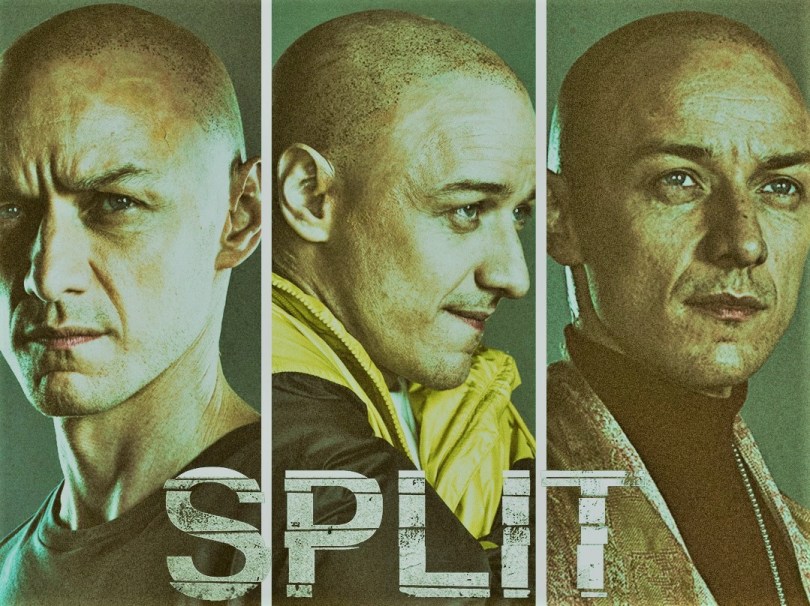
Going into a M. Night Shyamalan film nowadays comes with certain guarantees. You’ll have been wooed by the trailer, believing he’s back on The Sixth Sense sort of form. After an hour, you’ll feel the eerie creep of disappointment settling in. By the end, the “twist” will lead to abject dismay and a vow never to trust him again. But then he serves up James McAvoy playing a man with twenty-three distinct personalities.

So, we all jump aboard the Shyamalan train once again. This time we know from the adverts that McAvoy’s character kidnaps three teenage girls. They come in the guise of Skins’ Jessica Sula and her best buddy, Haley Lu Richardson’s Claire. When they’re nabbed, they are leaving Claire’s birthday party and have sympathy invite – and our lead protagonist – Anya Taylor-Joy’s Casey with them.

So far, so good. The build begins for a psychological thriller. We first meet Dennis, an OCD strict jailer. This personality is kept in check by Patricia, his female personality that helps run the gig. The plan is to feed the girls to The Beast, a yet-to-be-met personality that is above all humankind.

Do you feel that thriller swinging toward a horror?

In between captive scenes, we see Dennis parade as Barry to his therapist and seeks counsel. She totally buys the idea that within a person, multiple, completely separate identities can exist. She even gives examples how physiological changes occur depending on the personality assumed.

The host in this case is Kevin but he’s been overrun by Dennis and Patricia. The collective is known as The Horde. It’s explained they all sit around a circle waiting for their time in the light. Kevin’s nine-year-old personality, Hedwig, has the ability to control people’s slot in the light. He’s agreed to assist Dennis and Patricia because they prevent The Horde poking fun at him.

For a time, it becomes teen slasher. The girls try revolts and get put into solitary confinement. But throughout all the main actors do their roles justice. McAvoy is impressive carrying the load of diverse personas but it’s no Heath Ledger as The Joker. More, engaging performance amidst a struggling script.

When we finally get to meet The Beast, the movie becomes ludicrous. It’s okay to suspend disbelief if the requirement is made clear early on. But to start with a grounded tone, have scenes stressing the seriousness of dissociative identity disorder, to then descend into something that would look ridiculous in a modern-day comic book is almost unforgivable.

4/10 . . . if the film finished a few minutes earlier than it did.

Remember how M. Night Shyamalan likes to throw in a twist? Well, he does it again here. I’ll not ruin it for you but that “almost” before unforgivable is for occasions such as this. For the sake of a quick shock in the cinema, he would have been better just laying his cards out in advance. Doing so would have enhanced the viewing of the movie rather than numerous headshakes at the screen and the laughter it unintentionally provided in various scenes.

5/10 (Probably should be more after the final scene sinks in but M. Night Shyamalan has missed a trick.)

Moonlight – Review

Thanks to Odeon’s Screen Unseen, I was able to see Moonlight earlier than most in the UK. It was a great surprise and afterwards make me realise something else – even more surprising – it isn’t the frontrunner for this year’s Academy Awards.

Let’s cut to the chase right there: Moonlight deserves to take home a lion’s share of the Oscars. It isn’t because it’s edgy or brave, it’s because it’s well-made, beautifully told, expertly acted. The content almost becomes secondary.

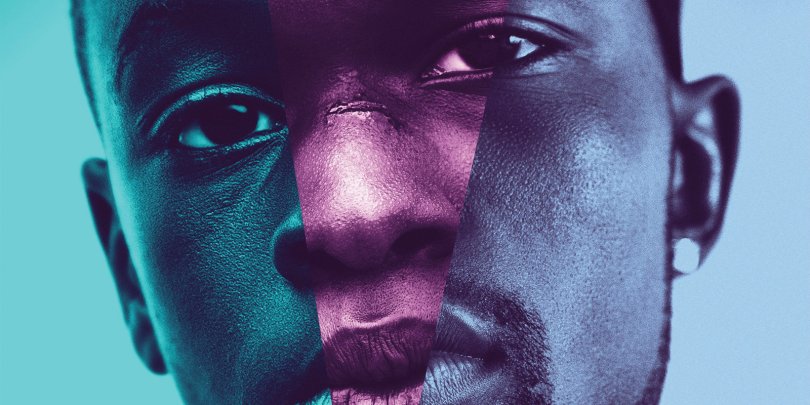
It follows the lead character through three stages of his life, divided here into chapters titled after his changing name. He starts as Little, a shy and reclusive boy that is victim to bullying. While it may be questionable that at such a young age, his peers would detect a difference in sexuality, it is the implied reason for the bullying.

He befriends drug dealer, Juan. He gives the boy a few insights, introduces him to his warm girlfriend, Teresa, and offers an alternative view that his crack addicted mother provides. That’s a bit of a niggle, the man he trusts is also the man selling the product that is ruining his home life.

Naomie Harris plays his mother, Paula, and it’s a testament to her acting prowess that a real-life teetotaller is more believable as a crack addict than as Naomie Harris in interviews. The general consensus is that she delivers the performance of the film but I find it debatable.

By high school, Little becomes Chiron, child actor Alex Hibbert becomes Ashton Sanders and it’s entirely believable they are one and the same. Here the bullies are more violent, the sexual desire more pressing. His mother’s addiction more crippling. Teresa his only safe haven following the passing of Juan.

By the third act we meet a redefined Chiron, now named Black, a hangover nickname from his best friend, turned sexual outlet, Kevin. He now runs the street, has beefed up and has a gangster vibe. Wearing a hat like Juan, he has inhabited the underworld (albeit in a different city) that shaped his early years.

At first, the change in character is jarring but it slowly sticks. Chiron still lacks the ability to string together long sentences and is, for all intents and purposes, an outcast. Beneath his new look, the same little boy exists.

I don’t see it as a film about sexuality or race or social class. It’s a story about Little aka Chiron aka Black. Society relies too much on labels and uses them too readily. This proves the world is just people. Different people with different struggles that shouldn’t be defined by pigeon holing.

It works, and deserves accolades, for the way it allows the viewer to connect with Chiron.

9/10