A Touch of Grey – Review

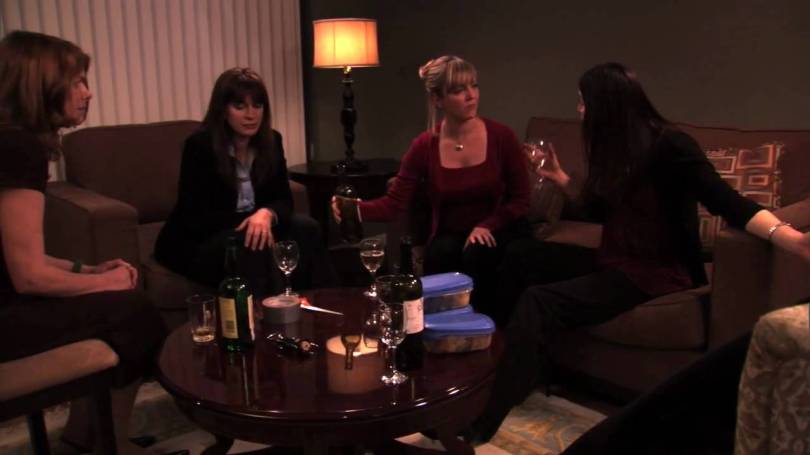
On the face of it, A Touch of Grey, had the chance to be an understated work of intelligence. Its premise is to reunite four women after twenty-five years. The former high school friends would compare notes, and with a comedic angle, examine one another’s lives.

That was on the face of it, at least. Instead the early moments in the film are far from funny. Cringe, yes, but not in a deliberate way. Less The Office and more like it’s been produced by people that normally work in a paper mill.

Terrible camera work is only spared the title of worst element by the dire dialogue. Clichéd, forced and delivered by actresses that prove why some are suited to commercials and others meant for the big screen.

The soundtrack would have sounded bad on a bad seventies daytime TV show even back in the seventies. The little snippets of this remove you further from anything remotely natural feeling – if that’s at all possible, with the jarring conversation that sounds like a primary school student has written it for a lazy homework piece.

In the early going, it’s understandable if you give up before the thirty-minute mark. After all, there’s still time to press Stop on the player and find another movie. But then enters our fourth and final woman. Angela Asher’s Liz saves the setup from descending into something even worse.

She delivers her lines in the informal but natural way they were intended. The bigger life issues come up. Suddenly it’s not middle-aged women acting like they think girls do on a get together, but relatable issues we all face.

It begins to feel less forced, more natural especially when Barb opens up her heart. This is another saving grace because up until this point the actress who plays Barb, Maria del Mar, was the figurehead of the film. She was carrying a failing concept on her back and was looking as broken as her character.

Her little nuances and facial expressions give the depth to the later scenes that were wasted early on. The gloss is removed and it actually goes a little dark. If the initial annoying stages were set to act as a contrast, it was unnecessary, what follows is poignant enough.

It goes from touching, Patti breaking down about age catching up with her body but her mind feeling young. To the ridiculous, when Barb puts a lemon in Patti’s eye to disguise her tears from the others.

It is moving, just about. It suffers from all the additional and unnecessary components the filmmakers assumed were required to get it on film. These only serve to detract from the core messages.

It should have been played out as if on stage, delivered in monologue rather than moanalong.

The final third of the film saves it from a terrible score. Although it should feel lucky it hasn’t suffered a lower mark in spite of this.

4/10

The Leftovers – Season 2 – Episode 10

So an extended episode attempts to wrap up what has been an enthralling season. Even with the extra minutes, nobody expects all the answers. But things look bleak for Jarden as a whole and in particular Kevin Garvey, whose handprint on the girls’ car has now been identified. Oh yeah, and he’s been a little bit dead for an episode.

In a move that is either deus ex machina or a necessary plot device (I’ll let you decide), Kevin suddenly remembers the missing girls faked their disappearance. How that sits with you could change the perception of an entire season.

Knowing this doesn’t stop John Murphy shooting him and leaving Kev for dead . . . again.

So we head back to that strange hotel (afterlife or not?) where he once again finds a way to escape back to reality.

Once back on familiar ground the Guilty Remnants have enacted their plan. The illusion of a Miracle Town has given way to all-out anarchy. Peace has been destroyed and this time the cult has a strong foothold over a town.

Kevin and John makes friends, as you do after a friendly shooting, and pull together.

The ending is emotional and it’s easy to feel that Kevin has been on a journey. It all just feels a little contrived.

7/10

The Leftovers – Season 2 – Episode 9

After taking a leap of faith and entering an unknown realm, episode 9 brings the viewer crashing back to reality. In doing so the real antagonists of the show resume their reign of terror. It means the full return of the Guilty Remnants.

We get a final bit of backstory about how Liv Tyler’s character, Meg, became disillusioned and then self-radicalised. This goes in unison with catching up with Tom Garvey. From the backstory we learn Meg has already been to Jarden with her husband, and with a desperate Tom in tow, she intends to return.

Finally, we get to see the plot the cult have been working to all along. They have become much harsher under Meg’s rule. At one point she orders a public stoning. The parallels to terrorism are deliberate and used to great effect.

After all the fantastical elements of Kevin’s journey, this is the harsh reality that awaits the characters.

The Guilty Remnants arrive in Jarden to end any sense of Eden and inflict their idea of hell. With it they bring answers about the missing girls.

8/10

New Top Gear Review

One of BBC’s flagship shows has finally returned to our screens. Chris Evans and Matt LeBlanc replace Jeremy Clarkson, Richard Hammond and James May as Top Gear presenters. The interest in how they’d do has been intense as the shadow of the three departing hosts looms large. At last, we have some answers.

The show pulls no punches in the opening segment. Evans and Sabine Schmitz (a German female driver) head to the actual Top Gun facility in America. Cue movie quotes galore, one of which Sabine gets comically incorrect, and two co-pilots. Their job is to control a laser guided targeted system attached to Evans’ and Schmitz’s cars.

It was Dodge Viper versus Corvette Z06, and while the concept was fun, it becomes clear early on this new Top Gear is going to be very scripted and staged. “Hit the brakes and fly right by,” the famous quote used to avoid a lock-on. Without proper planning, two supercars would have been written off.

That’s not to say the old show wasn’t planned but it always felt natural. That lack of organic feel becomes evident once Evans and LeBlanc share screen time together. At this moment there isn’t a spark between them. It may come over time, and there’s enough promise to suggest they deserve the chance.

This week’s theme was USA v UK and was decided by driving Robin Reliants to Blackpool, a series of challenges (standard dragging Ice Cream vans around stuff), climaxing in Jeeps hauling the Reliants to the top of a hill. The main thing to take away from it is how much Matt LeBlanc looks like Ross Kemp if you put him in a helmet and goggles.

Breaking up the challenge was LeBlanc in a buggy skipping around Morocco. Again, it was a decent feature but the stunt at the end was pure script and felt out of place.

The show has justification sticking to the tried and tested formula. Star in a Reasonably Priced Car got an upgrade. It’s now a Mini and there’s an off-road section in the track. Gordon Ramsey and Jesse Eisenberg the first to take the new layout. But sticking to the old way too closely leaves Top Gear feeling dated.

Evans has said the show isn’t in competition with Clarkson and Co.’s The Grand Tour, and with good reason. They will never go head-to-head and The Grand Tour’s £140m budget dwarfs BBC’s own production. But what it does is highlight how “New” Top Gear now feels old.

It doesn’t help when Evans is sat in cars trying to do a Clarkson impression. He has enough natural charisma and presenting experience to avoid this. The problem is worsened by LeBlanc’s blandness. It could be seen as a cynical move having the American on the show just to increase its export value.

Overall the show just got a lick of paint when it’s clear it needed the type of overhaul Matt LeBlanc’s Robin Reliant required.

Based on the Top Gun section and the potential, it gets 6/10.

The Revenant – Review

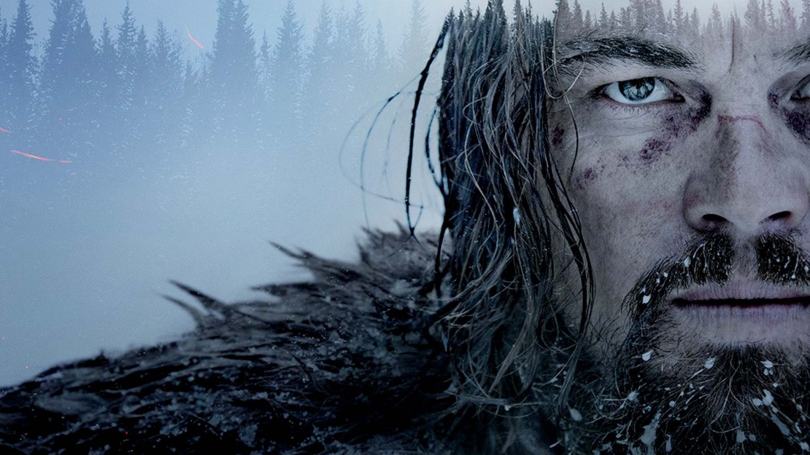
For the second movie review running the delightful Tom Hardy graces the screen. But The Revenant is a Leonardo DiCaprio vehicle. All plaudits and attention have gone to him. After all the hype, thousands of memes fighting to ensure he bagged an Oscar, the dust has settled. What remains in the cold light of day raises a few problems.

Alejandro G. Iñárritu, director and screenwriter, hasn’t done a bad job. Let’s get that out of the way. The criticisms that follow are more down to the burden of the film’s own hype. It’s a visual feast and he has captured the harshness of the environment. At times it is a moving canvas. Sadly, a picture here doesn’t paint a thousand words. It just fills in some time before Leo rolls around in the snow and/or dirt again.

That brings us to the leading man. Before we go on, he didn’t deserve an Academy Award for this performance. Yeah, yeah, he did deserve one on his mantelpiece at some point. But not in this turn. At times the suspension of belief asks too much. At others he mumbles through plot holes. Like, literally.

After being mortally wounded after the famous bear scene (I’m sure you’ve all seen the publicity surrounding it) he is left unable to speak (took a nasty scrape to the throat). But he did manage to muster some words for his son when an emotional scene required it. Then he was silent again for an hour.

He also musters up energy when seconds previous he couldn’t raise an eyebrow. It made me raise mine. Numerous other scenes had the same effect. He fell off a mountain but survived the fall thanks to a tree and then copied Han Solo’s survival techniques from the Empire Strikes Back‘s Hoth scene, a whole 160 years before that movie had made its way to cinema screens.

Pointing fun at the film is the only way to not feel saddened at a missed opportunity.

This could have been a modern day Deliverance. Instead it is a film only powerful at times, at others it is more vacuous than the landscape it is set in.

And like his effort in Legend, Tom Hardy once again has a stellar performance overlooked. Last time it was down to a poor script. This time the story is better, but the focus all wrong.

It’s rating is based on the touching scenes, the moral of connection through adversity, Hardy’s contribution, and the visual delights.

7/10